
By Carl Samuel Carter
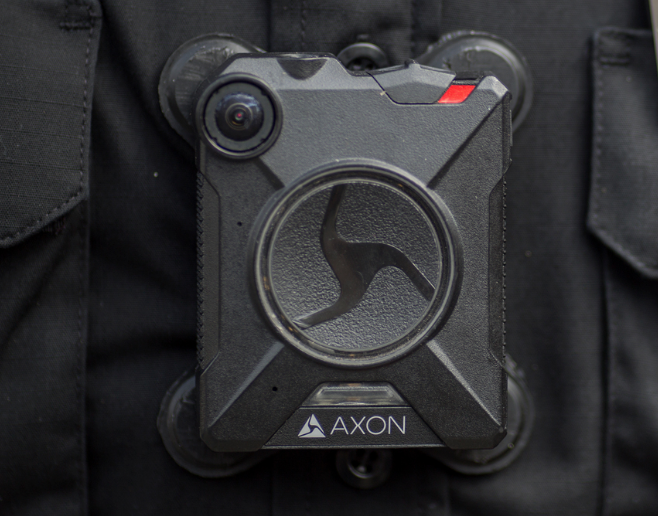
It is shocking that in 2025, police officers in Guyana have access to delete their own body-cam footage. Minister of Home Affairs Oneidge Walrond has announced that ranks caught deleting or tampering with recordings will face disciplinary charges or demotion.
That statement is welcome, but it also reveals a deeper issue: officers should never have that kind of access in the first place. In a modern, transparent law-enforcement system, footage must be automatically uploaded and stored securely beyond the reach of any single officer or supervisor.

Why this matters
In any society, policing must rest on more than uniform and badge. It is built on legitimacy, on public confidence. When a member of the public fears that their interaction with police may not be recorded, or may be erased, then power tilts dangerously. For ordinary citizens who already harbour deep mistrust of police institutions, the assurance of footage is one of the few objective guardrails.
Minister Walrond affirmed that body-cams have been introduced in the GPF, that the recordings go to divisional command centers and are available for review. Guyana Times+1 She noted that according to Standard Operating Procedure (SOP) the deletion of footage is an offense. Guyana Times+1
Yes, this is progress. But progress does not yet equal perfection.
What still needs to be done in Guyana
1. A body-cam architecture that forbids deletion
It is one thing to say “don’t delete footage” it is another to make deletion technically impossible. Guyana must move to a system where body-cam recordings are automatically uploaded to a DEMS; digital evidence management system, secure server, where no rank or local supervisor can delete or tamper with the footage. It must be immutable. That way, the footage becomes a reliable ledger of events, not an optional record.

2. Independent oversight and enforcement
When enforcement is left solely within the police structure, the risk of internal bias looms large. What is needed is a separate agency, for example along the model of a civilian oversight body, with full authority to investigate, prosecute and recommend disciplinary action. The policing body should not investigate itself in matters of serious misconduct without oversight. If the GPF is to win trust, independent accountability is essential.

3. Whistle-blower protections and legislative backing
Given the climate of distrust in many communities, a person who reports wrongdoing, corruption or crime may fear retaliation. If officers believe there will be no consequence for deleting footage, the fear becomes real. Guyana must enact a whistle-blowing Act that protects members of the public and members of the force who speak up. Without this, the promise of accountability remains fragile.
4. Transparent policy, clear communications and training
The SOP that forbids deletion must be publicly accessible in the interim, until a DEMS; digital evidence management system is fully implemented. Ranks must be trained, supervised, and consistently audited. The public must know what the policy is, how footage is stored, and how incidents are handled. Trust grows when citizens can see not only the rule, but also that the rule is enforced.
The positive ripple effect
When body-cams are properly managed, stored and controlled, a number of positive outcomes follow:
- Fewer false complaints or contested interactions, as the footage provides objective record.
- Deterrence of misconduct, because officers know they are being recorded and monitored.
- Stronger evidence chain for prosecution and justice.
- Improved public trust, because citizens see that policing is accountable.
- More professional policing culture, shifting away from “us vs them” to “service and protection”.
Minister Walrond noted that the body-cam roll-out has already helped, and that expansion is planned. Guyana Times+1This is promising.

But without the full framework little will change
If the government only stops at “you can be charged for deleting footage” but fails to provide the technological, structural, legislative and cultural supports, then the system remains vulnerable. A body-cam programme without robust backend equals a facade. Citizens may still feel that their interactions are opaque, and suspicion will persist.
In short, this is the beginning of the right path, not the destination. Guyana’s policing reform must combine: cameras that cannot be tampered with, secure centralized storage, independent oversight, whistle-blower protection, and transparent enforcement.
The message to the public must be clear: justice is not just promised, it is performed. The message to the police must be clear as well: accountability is not optional, it is fundamental.

Final thought
As a Guyanese who has seen too many shadows of mistrust in uniforms, I say this: Let us welcome this shift with hope. Let us applaud the decision to charge and demote officers who delete body-cam footage, it is the right move. But let us also encourage the deeper work: building the infrastructure, the laws, the culture that will make transparency permanent. Without that, we risk repeating the cycle of promises unfulfilled.
Guyana, you have taken a step. Now let us walk the path together.



Leave a Reply